In a seemingly turbulent world, more and more people are increasingly prioritizing their safety. Consequently, there has been a notable surge in demand for armored vehicles.
This rise, however, should not be entirely attributed to a concern for one’s safety. Today’s armored vehicles use a variety of functions and features, such as high-security regulations and sophisticated drivetrains. These improvements are having a positive impact on the manufacturing process of armored vehicles.
Meanwhile, political tensions, crime statistics, and warfare technology’s evolution dramatically affect the way armored vehicles are designed and constructed. Organizations need to follow the latest industry dynamics closely to keep up with their customers’ market demands.
Armored Vehicles: What They Are
Armored vehicles serve as customized means of protection against external threats such as gunfire, explosives, and physical assaults. They find application in military, law enforcement, and private security sectors, spanning from compact armored automobiles to fully fortified tanks. For secure transit, VIP protection, and safety in high-risk locations, civilians also look to armored vehicles. Business firms are also big fans of armored vehicles, which may be utilized for executive protection or cash-in-transit.
Various defensive equipment, such as ballistic body panels, ballistic glass, and many other materials that can withstand huge impact, are installed in armored vehicles. Adding features like jamming devices and smoke screens, which can also play a role in infantry combat, are also incremental to armored vehicles.
Armored Vehicles: The Future Paradigm
Future predictions indicate that the development of armored vehicles will proceed at a never-before-seen rate. Let’s now look at some intriguing developments and projections for the future of armored cars.
Eco-Friendly Themes
Armored vehicles are set to become increasingly prevalent as environmental sustainability gains traction worldwide. It is anticipated that armored vehicles will use electric and hybrid technology, lowering their carbon footprint without compromising the high degree of protection they offer. Imagine cruising around in an armored automobile that protects the environment and keeps you safe. A win-win situation, right?
Advanced Defence Technologies
More sophisticated protective systems are anticipated to be included in future armored vehicles. These include enhanced vehicle control systems for greater safety in the event of danger, better ballistic materials that are stronger yet lighter, and integrated surveillance systems. Our goal is to lead the way in these developments for our selection of armored cars and SUVs.
Hybrid and Electric Drive Systems
The adoption of environmentally sustainable practices has become a prevailing trend within the armored vehicle industry, mirroring the advancements seen in conventional automobiles. The rapid uptake of fuel-efficient hybrid and electric powertrains signifies a paradigm shift towards eco-conscious solutions. The new propulsion systems not only provide environmental advantages with fewer emissions and quieter operations but also have essential applications for military purposes. Enhanced efficiency translates into extended mission durations without the need for frequent refueling, thereby bolstering operational effectiveness. Moreover, the subdued acoustic profile of these vehicles, facilitated by their quieter engines, enables stealthier maneuvers, aligning with contemporary military strategies emphasizing covert operations.
Cybersecurity Integration
As armored vehicles become more advanced with digital technologies and networking capabilities, protecting them from cyber threats is crucial. These vehicles have important roles to play, and a cyber attack could put lives at risk or disrupt essential operations. Because of this, manufacturers are investing heavily in creating strong cybersecurity protocols. These protocols include various measures such as intrusion detection systems, encryption methods, and secure communication systems. We aim to improve the digital systems of vehicles to shield them from cyber threats. It’s important to be proactive in defending against these threats.
The Rise of Unmanned Ground Vehicles (UGVs)
Driverless armored vehicles are shaking up the industry. Having robots instead of human crews go into danger zones obviously reduces risks to personnel. But UGVs are proving useful for way more than just explosive disposal – they can handle recon, surveillance, you name it. With technological advancements, we can expect to see an increase in unmanned armored vehicles on upcoming battlefields. The progress in cutting-edge sensors, artificial intelligence, and reliable communication networks has sped up the deployment of UGVs in military and security operations globally.
Increasing Comfort and Luxury
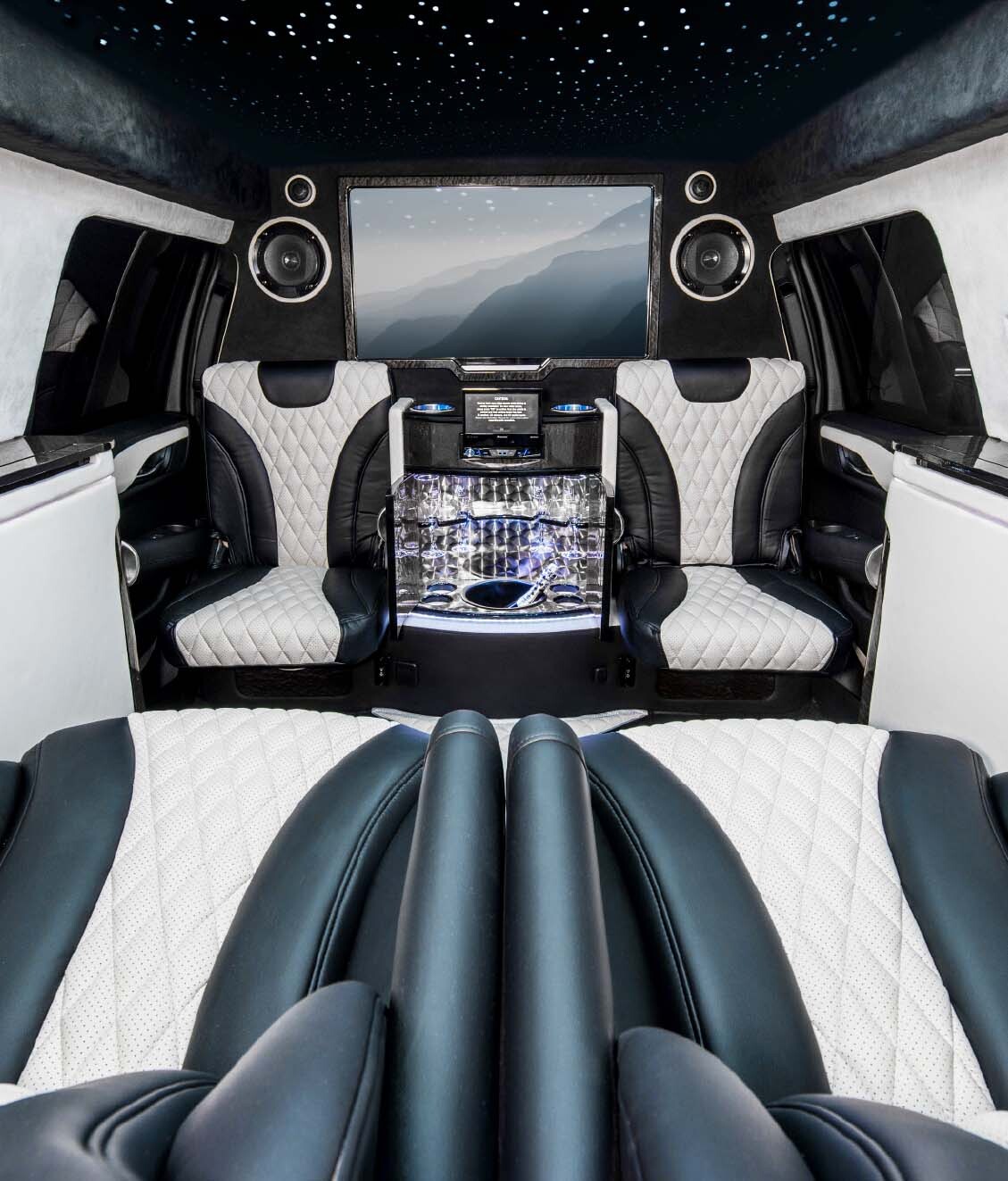
Advancements in security and sustainability are not the only things driving the future of armored transportation. We also envision improvements in comfort, luxury, and customization possibilities to accommodate the different demands and interests of our clients. The objective is to offer an unmatched blend of safety, elegance, and comfort, from first-rate interiors to customized external finishes.
Artificial Intelligence in Armored Vehicles
Moving forward, artificial intelligence and machine learning will significantly impact armored transportation. This may manifest as sophisticated danger detection, adaptive protection, and predictive maintenance systems that can recognize and react to different situations, all of which would increase passenger safety.
In addition to comfort and luxury, the market for armored vehicles is undergoing a fundamental change due to increasing security problems, environmental concerns, and technological advances.
We at Miami Armored® are enthusiastic about these impending advancements and are dedicated to implementing them into our armored vehicle designs. Get in touch with us to learn more!